A new year brings with it a sense of fresh starts, big hopes, and the urge to do something a little more intentional. Whether you are a longtime crystal collector or just drawn to beautiful things from the earth, certain stones feel especially fitting as the calendar turns. Here are four crystals worth celebrating as you head into a brand new chapter.
The Stone That Looks Like Gold
If any mineral captures the spirit of a new year, it is pyrite. Known widely as "fool's gold," this iron sulfide mineral has a brassy, metallic shine that makes it one of the most visually exciting stones you can own. Pyrite forms at both high and low temperatures and turns up in igneous, metamorphic, and sedimentary rocks all over the world. (Geology.com)
Its crystals often grow into near-perfect geometric shapes: cubes, octahedrons, and twelve-sided pyritohedrons, each face sometimes marked with fine parallel lines called striations. The name pyrite comes from the Greek word for fire, because the mineral produces sparks when struck against steel.
That combination of golden color and geometric precision makes pyrite one of the most dramatic display minerals around. A cluster of pyrite cubes on a desk is the kind of thing that makes people stop and stare. For a new year that you want to feel bold and bright, pyrite is a perfect fit.
(Source: Geology.com, https://geology.com/minerals/pyrite.shtml | Wikipedia, https://en.wikipedia.org/wiki/Pyrite)
A Stone That Holds the Northern Lights
Labradorite is one of those minerals that seems almost impossible. From the outside it looks like an ordinary gray or dark stone, but tilt it toward the light and it erupts into flashes of electric blue, deep green, gold, and sometimes even violet or orange. This effect, known as labradorescence, is not caused by dye or pigment. The optical phenomenon comes from a lamellar structure within the crystal that forms through an exsolution process, and the effect is only visible when the lamellar separation falls between 128 and 252 nanometers. (Mindat)
In other words, the color is produced entirely by the physics of how light bounces between microscopic internal layers. Labradorite is a feldspar mineral named for its occurrence near Nain on the coast of Labrador, Canada, and it turns up in many gabbros, dolerites, norites, and basalts. (Encyclopedia Britannica)
As a new year gift, labradorite carries a visual surprise that feels like a little metaphor in itself: ordinary on the surface, extraordinary underneath.
(Source: Mindat.org, https://www.mindat.org/min-2308.html | Britannica, https://www.britannica.com/science/labradorite)
Rich Purple from Deep in the Earth
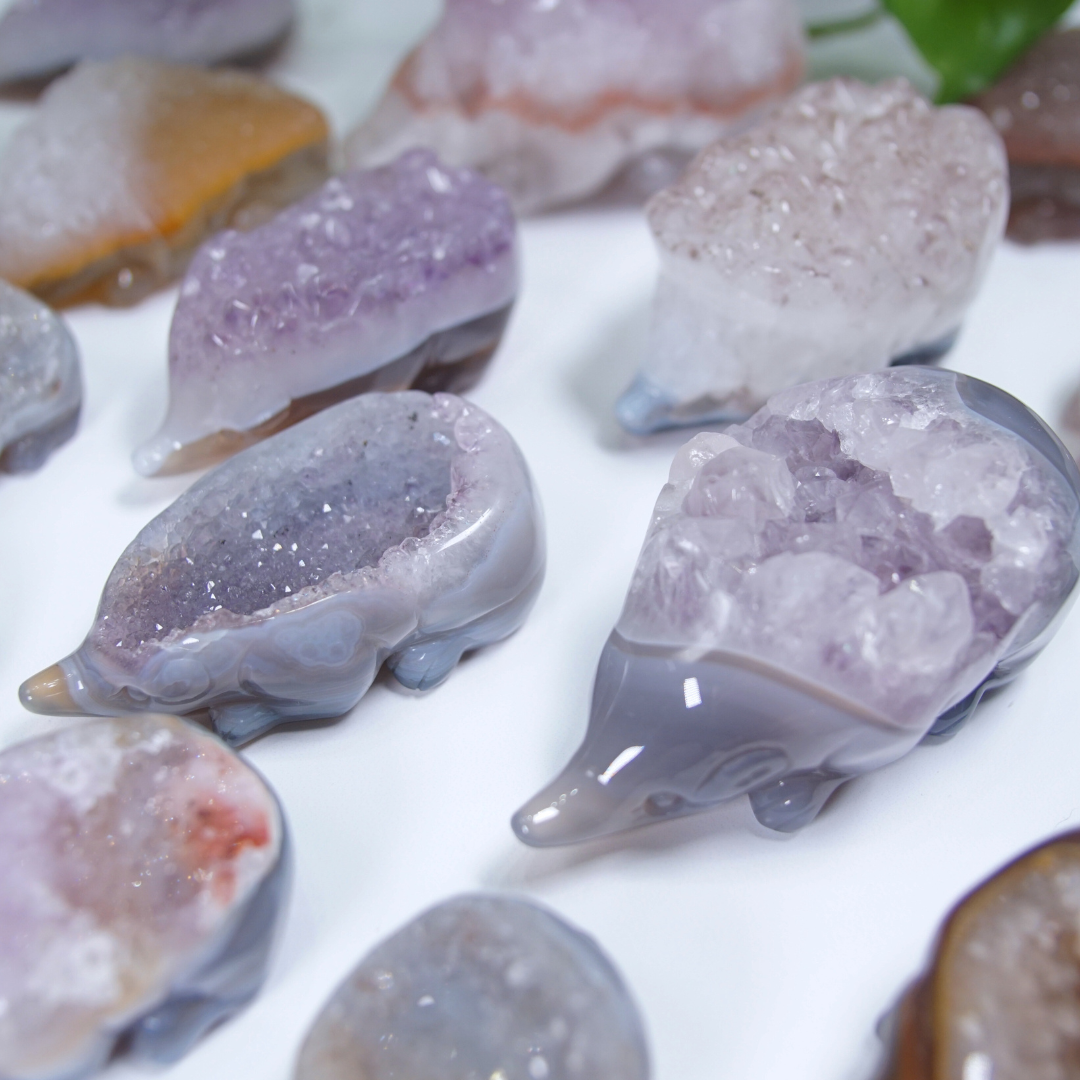
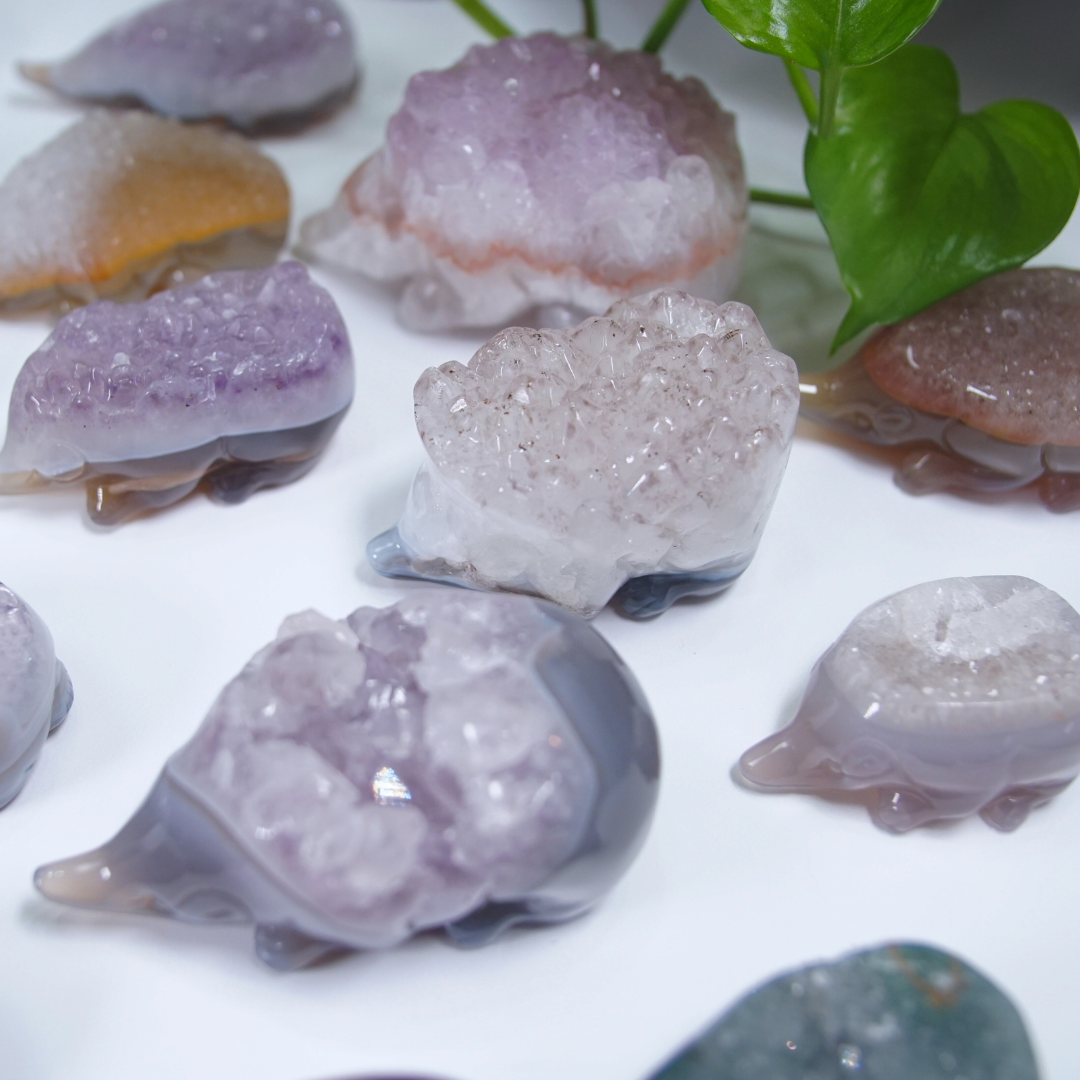
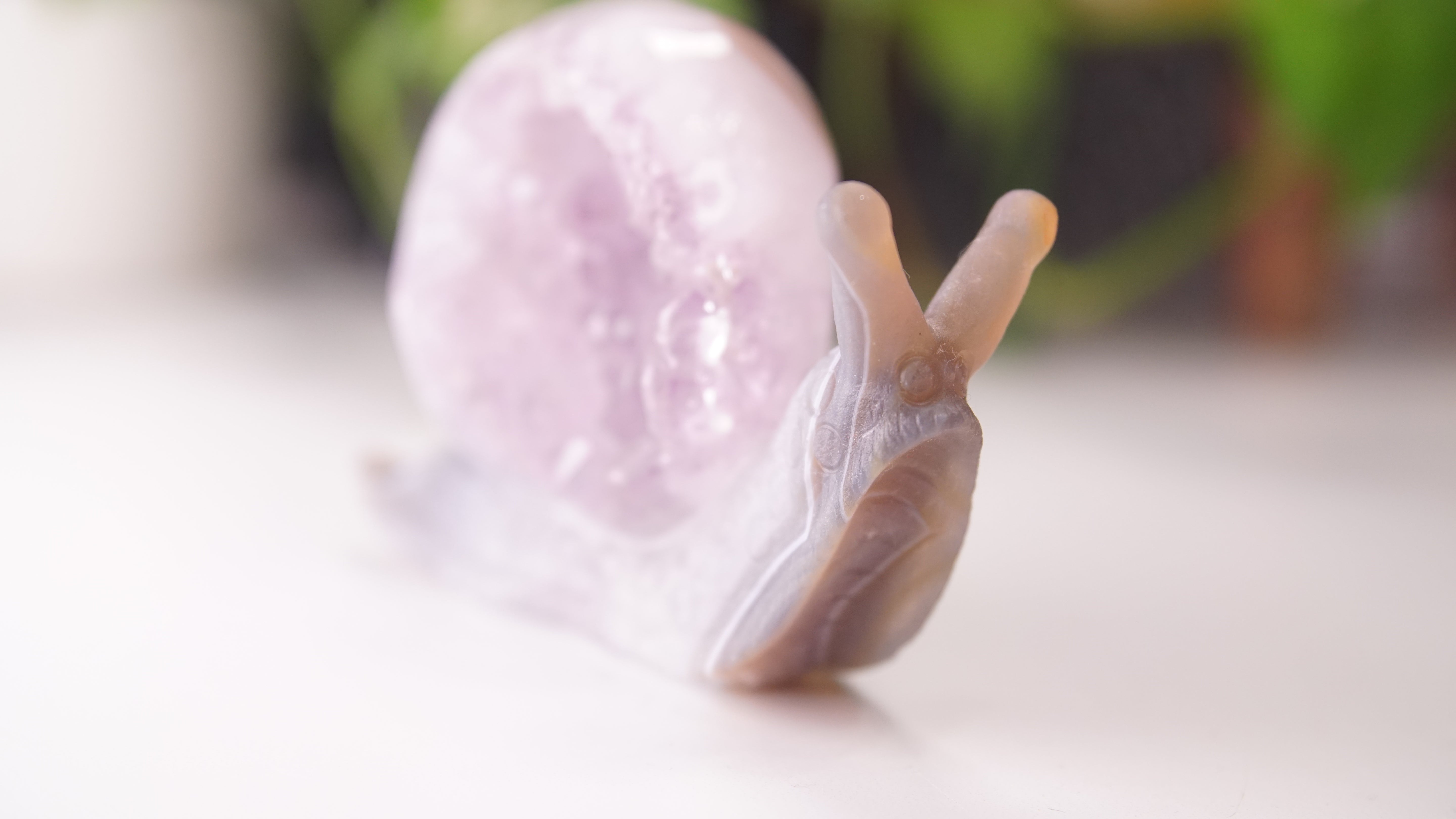
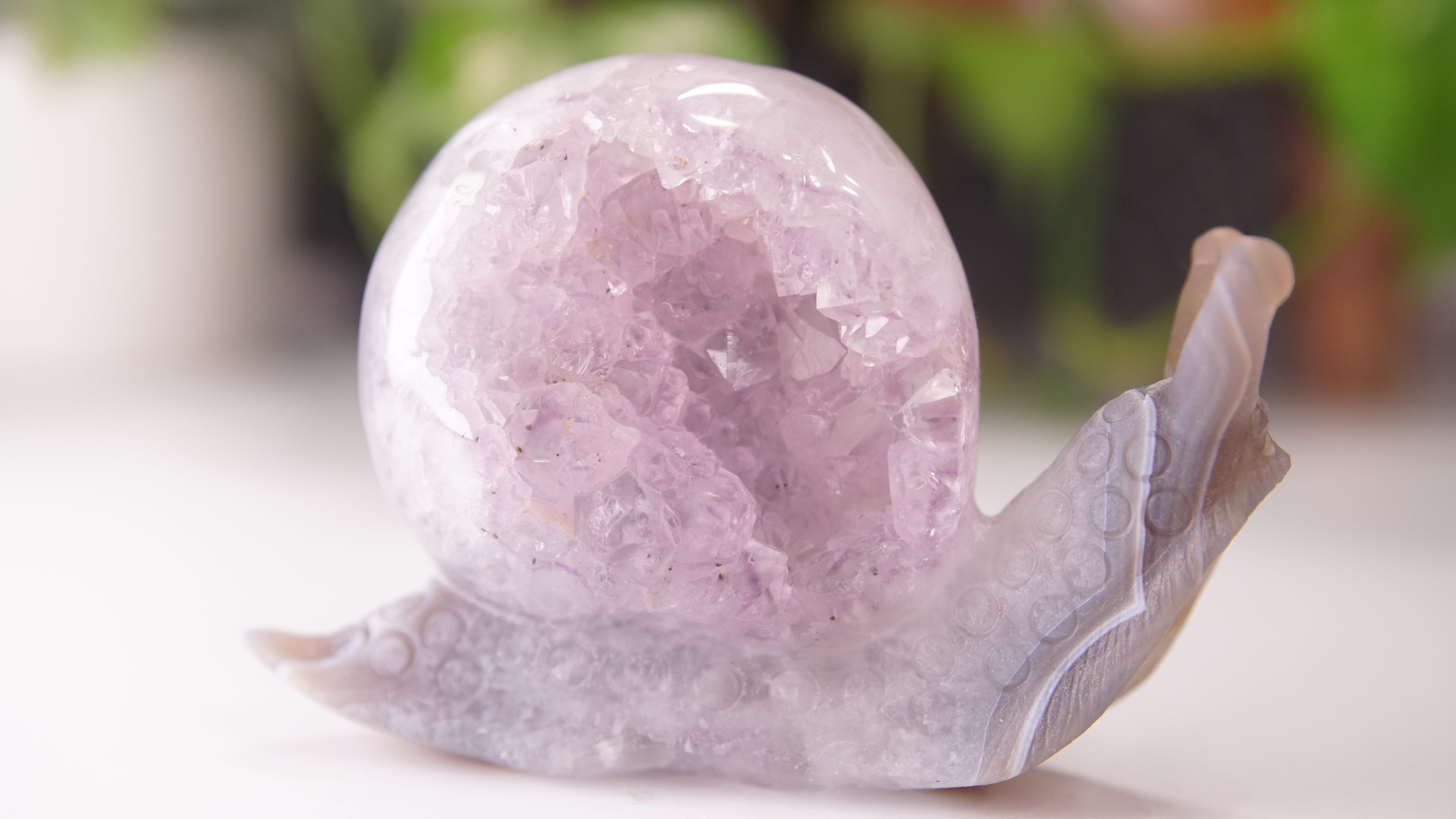
Amethyst is one of the most recognized crystals in the world, and for good reason. Its deep purple color is produced by iron within the quartz crystal structure, modified by natural radiation from surrounding rocks during formation. As amethyst grows slowly over time, shifts in the chemistry of the water feeding its growth can cause color zones of varying intensity to form, each one recording a different stage of development much like the growth rings of a tree. (Geology.com)
Amethyst is commonly found growing inside geodes, which when cut open reveal a hollow cavity packed with purple crystal points. It contains more iron oxide than any other variety of quartz, which experts believe is the key driver of its violet color. (Encyclopedia Britannica)
Large amethyst geodes sourced from Brazil can grow several feet tall and make for breathtaking display pieces. There is something deeply satisfying about a stone that builds itself in quiet layers over millions of years, making amethyst a fitting symbol for the slow, steady work of a new year.
(Source: Britannica, https://www.britannica.com/science/amethyst | Geology.com, https://geology.com/gemstones/amethyst/)
The Purest Form of the World's Most Common Mineral
Clear quartz is the simplest and most abundant of all quartz varieties, built from nothing more than silicon and oxygen bonded together in a repeating crystalline structure. That simplicity is exactly what gives it such striking clarity. Quartz is the most widely distributed mineral at Earth's surface, present across all continents and forming across a wide range of temperatures in igneous, metamorphic, and sedimentary rocks alike. (Geology.com)
In its purest form, clear quartz grows into six-sided pointed columns with a glass-like transparency that catches light in a remarkably clean way. A well-formed clear quartz point has a sharp, architectural elegance to it that suits any space. As a new year crystal, it represents clarity in its most literal, geological sense.
(Source: Geology.com, https://geology.com/minerals/quartz.shtml | Britannica, https://www.britannica.com/science/quartz)